Catering Invoices That Get Paid: Essentials, GST Fields and Follow-Up Rhythm
Mahipal, Founder, CaterCaptain · Jul 08, 2026 · 3 min read
The Idea Behind CaterCaptain
Most software for caterers is built far from any actual kitchen - global products that assume drop-off catering and card payments, or generic restaurant POS stretched over an industry it doesn't understand. We took the opposite bet: build deep for one place first. Here's the reasoning, openly.
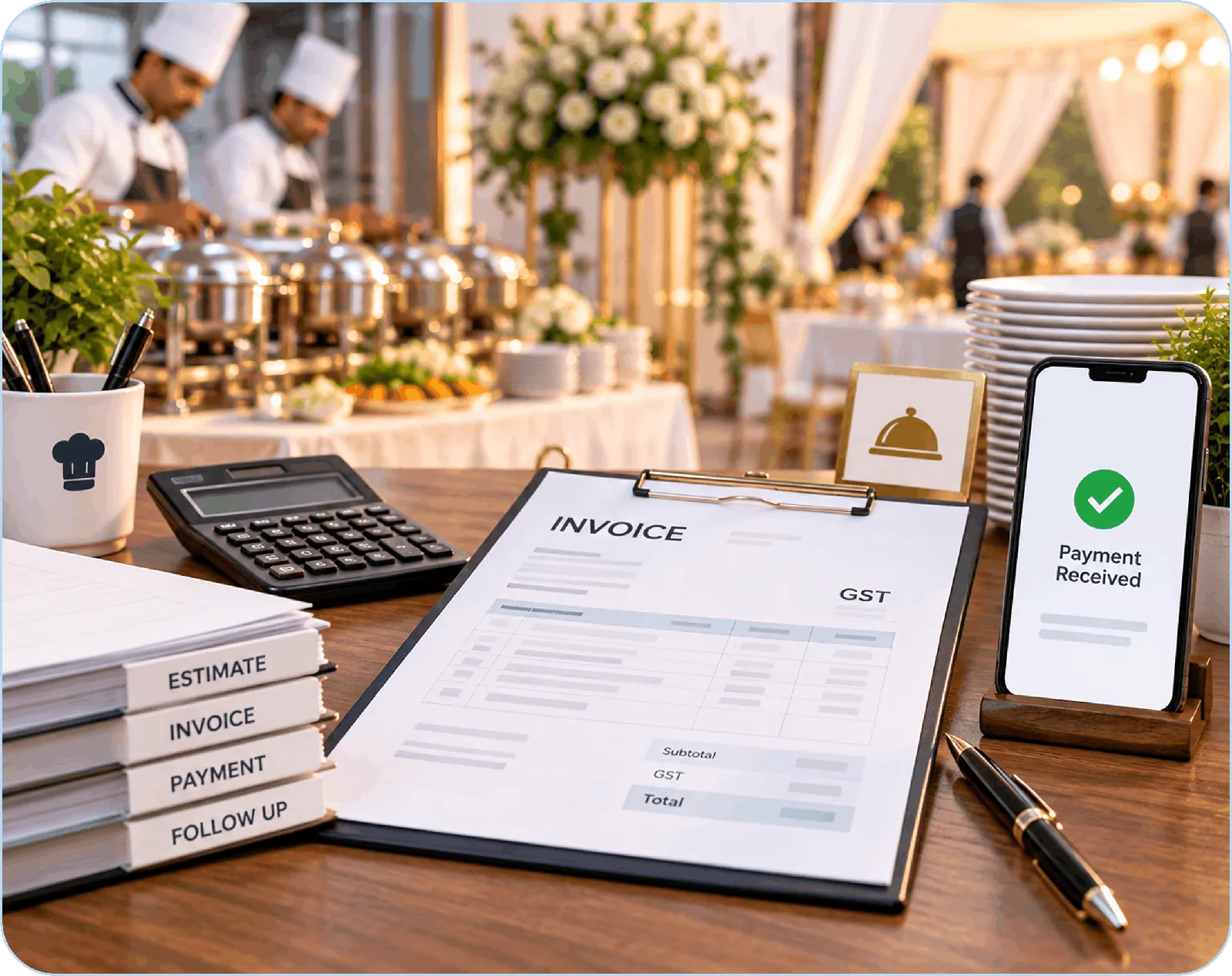
An invoice has one job: get paid without friction. Yet catering invoices routinely fail it - missing fields corporate accounts departments demand, advance adjustments done verbally, and follow-ups that depend on the owner remembering. Here's the tight version.
What must a catering invoice include for GST?
- Sequential invoice number and date - non-negotiable for GST and for your own tracking
- Your legal name, address, GSTIN; client's details and GSTIN for B2B
- Event reference: name, date(s), venue - accounts teams match invoices to approvals by these
- Service description with the same structure as the quotation (services, plates, rates)
- Taxable value, GST rate and amount as separate lines
- Advance adjustment shown explicitly: gross amount, minus advance received (with date), balance due
- Payment details: bank account, UPI, due date
The quotation–invoice handshake
The single most common payment delay: the invoice doesn't match what the family remembers agreeing. Guest count changed, a counter was added, a discount was promised verbally. The cure is procedural - every change during the event lifecycle gets written into the event record when it happens, so the final invoice is a printout of agreed reality, not a reconstruction from memory. Disputes drop to near zero when the paper trail is continuous.
Advances: track like a bank
Every advance needs: amount, date, mode, and which event it belongs to. Multi-event clients (a family with three functions) are where verbal advance tracking dies - ₹50,000 "for the wedding" gets mentally applied to the wrong function and both sides feel cheated. One ledger line per receipt solves it forever.
The follow-up rhythm that actually collects
- Day 0 (event +1): balance invoice sent while gratitude is fresh - the highest-recovery window in catering
- Day 7: polite reminder with the invoice reattached
- Day 15: phone call - human voice, still warm
- Day 30: formal reminder referencing agreed terms
- Beyond: owner's judgment - but the rhythm until here should run without the owner's memory being the trigger
The uncomfortable number: most caterers who "feel fine" about collections carry 45–90 days of outstanding balances they've stopped mentally counting. List every unpaid balance today, oldest first. The list is the fix.