Venue Kitchen Setup: The First 90 Minutes That Decide Your Event
Mahipal, Founder, CaterCaptain · Aug 12, 2026 · 3 min read
The Idea Behind CaterCaptain
Most software for caterers is built far from any actual kitchen - global products that assume drop-off catering and card payments, or generic restaurant POS stretched over an industry it doesn't understand. We took the opposite bet: build deep for one place first. Here's the reasoning, openly.
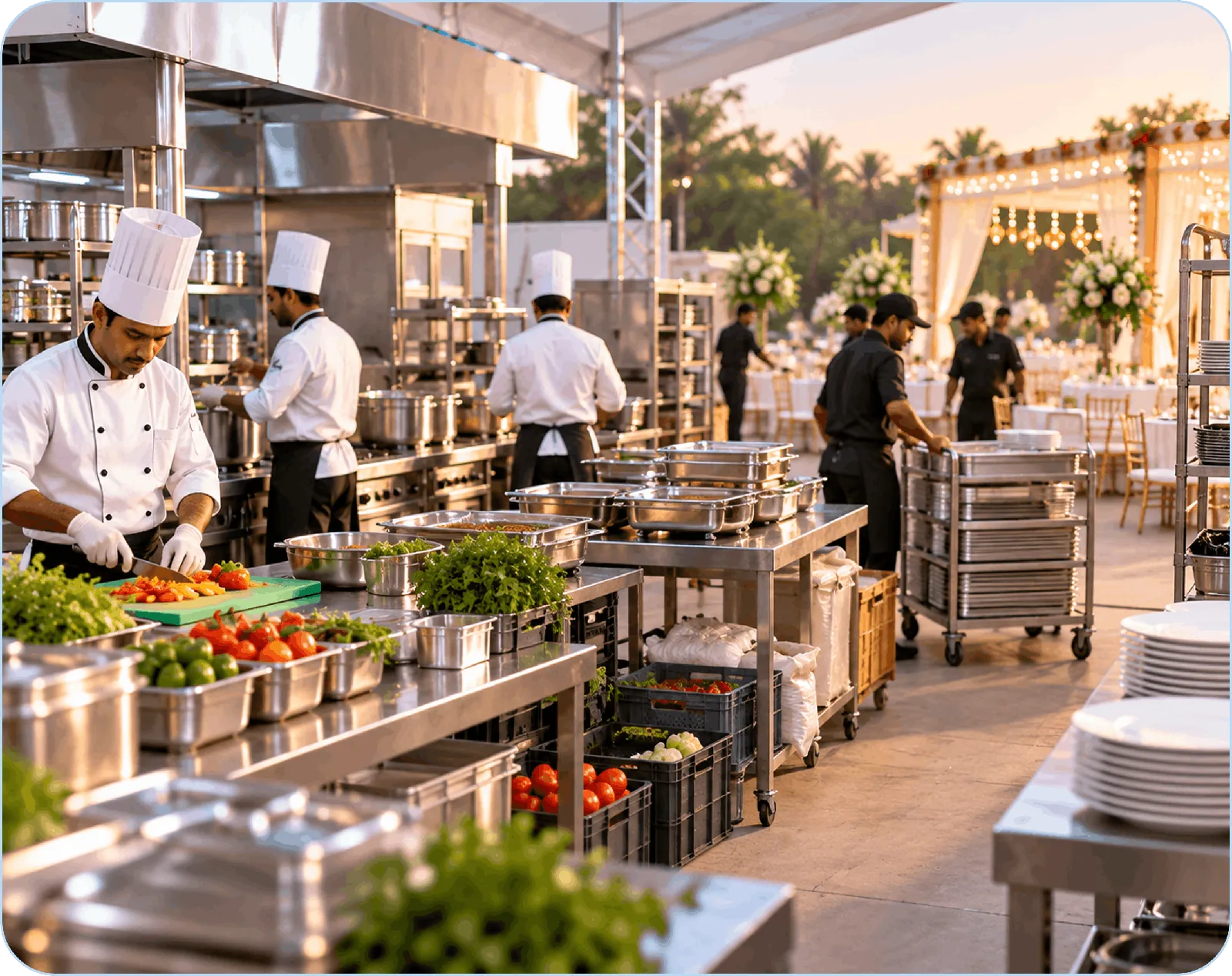
Event-day performance is mostly decided before the first flame: a venue kitchen laid out well runs itself; one improvised in a hurry generates friction with every dish. The first 90 minutes on site are your highest-leverage window - here's how the experienced crews spend them.
Before event day: the site assessment
Never meet a venue for the first time on event morning. A T-7 visit (or detailed call with venue staff, with photos) answers: kitchen space and surface, water source and drainage, power points and load, vehicle access for unloading, and where waste goes. Ten minutes of answers reshapes your equipment list and dispatch plan - and surfaces the venue that has "full kitchen facilities" consisting of one tap and a prayer.
How do you set up a temporary kitchen at an event venue?
The classic mistake is unloading into a pile and organising around it all day. Instead, mark five zones first, then unload into them:
- Receiving & storage - nearest vehicle access; dry goods racked, perishables into cold storage immediately
- Prep - cutting and mixing, between storage and cooking, with its own water access if possible
- Cooking line - burners arranged by menu sequence, ventilation-aware, minimum two exits never blocked
- Plating & pass - the kitchen-to-service handoff, facing the service route, kept ruthlessly clear
- Wash & waste - downstream of everything, near drainage, never crossing the food path
The test of a good layout: food moves in one direction - receive → store → prep → cook → plate → serve - without a single crossing loop.
Gas, water, power: the utilities triangle
- Gas: commercial cylinders only, regulators checked at loading (not discovered failing on site), cylinders upright, shaded and away from the cooking line, with one spare beyond calculated need.
- Water: confirm potable supply or carry it; a 500-plate event's cooking-and-washing water need surprises venues that "have water."
- Power: map your load (mixers, warmers, lights) against the venue's points before plugging a trip-out into the family's biggest evening.
The 90-minute setup checklist
- Zones marked, team briefed on the map (5 min)
- Receiving count against dispatch list - shortages escalated now (20 min)
- Cold chain established, storage racked (15 min)
- Cooking line assembled, gas tested, first burners live (25 min)
- Prep started on longest-lead items while line completes (parallel)
- Plating zone and service route walked with the service captain (10 min)
- Wash/waste live, safety walk - exits, extinguisher, first-aid location (15 min)
The unglamorous non-negotiables: a fire extinguisher within reach of the line, a basic first-aid kit, and every team member knowing both locations. Fifteen years without needing them is the point - the one evening you do, nothing else about the setup matters.