Managing Last-Minute Guest Count Changes Without Losing Your Margin (or Mind)
Mahipal, Founder, CaterCaptain · Aug 10, 2026 · 3 min read
The Idea Behind CaterCaptain
Most software for caterers is built far from any actual kitchen - global products that assume drop-off catering and card payments, or generic restaurant POS stretched over an industry it doesn't understand. We took the opposite bet: build deep for one place first. Here's the reasoning, openly.
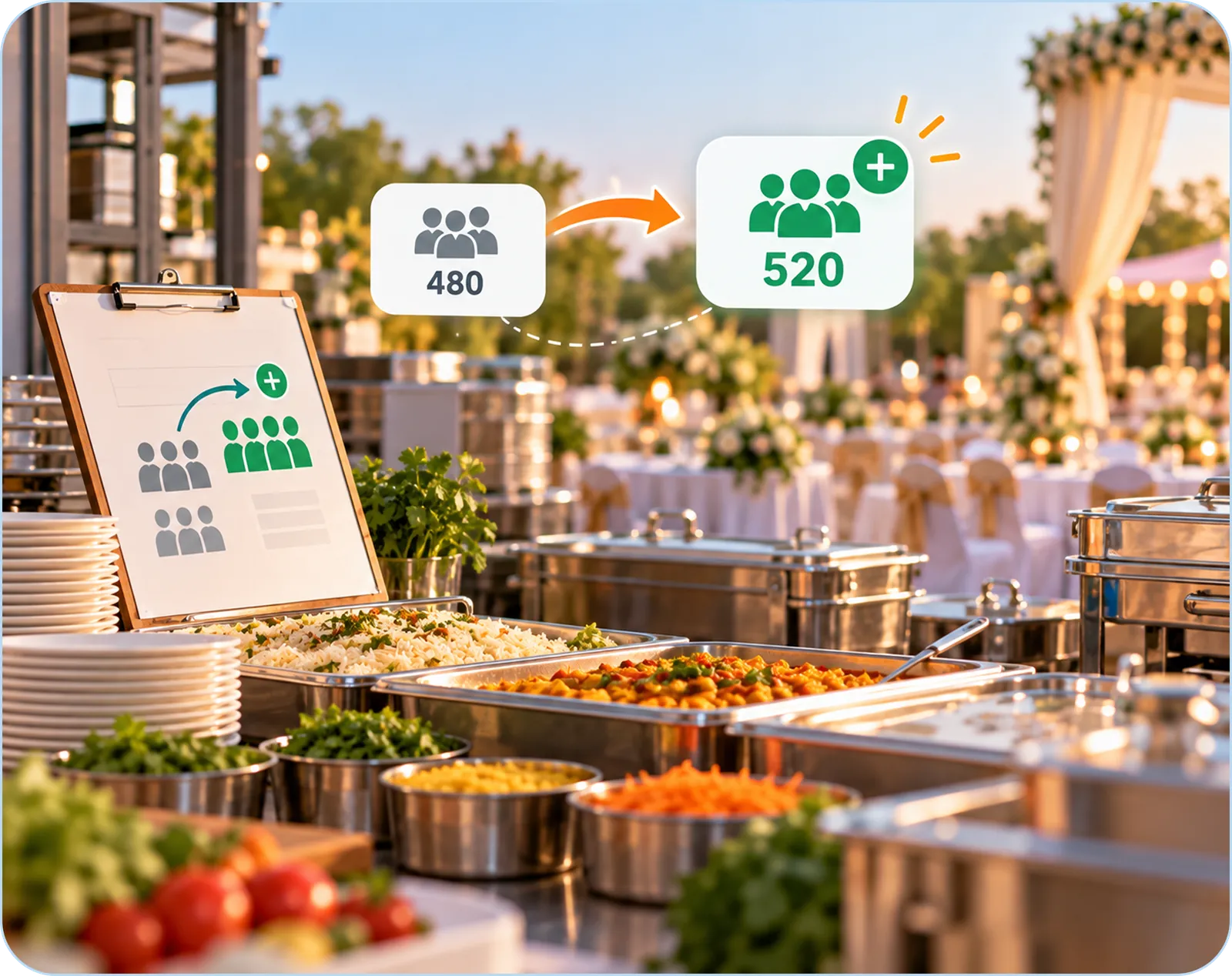
"Bhai, 100 mehmaan vadhare aavse" - Thursday night, for a Saturday wedding. Or its quieter, crueller twin: 400 confirmed, 310 attended, and the client wants to pay for 310. Guest-count volatility is structural in Indian events; whether it costs you margin depends entirely on what you agreed before and how you respond during.
How should caterers handle last-minute guest count increases?
- Final-count date: written on every quotation - typically T-3 for large events. This is the number you'll plan, buy and staff against.
- The floor: billing is on the final confirmed count or actual attendance, whichever is higher. You purchased and cooked for the confirmed number; attendance shortfall is the client's variance, not your loss. Stated kindly upfront, this clause is accepted routinely; invented during a dispute, never.
- The surge ladder: increases before final-count date at quoted rate; increases after it at a stated premium (10–20%) reflecting emergency procurement reality; day-of increases as best-effort with the premium and a served-quality caveat.
The surge playbook (when the +100 call comes)
- Triage by dish flexibility: scale the elastic anchors first - rice, dal, rotli, gravies stretch gracefully; premium fixed items (dry-fruit sweets, paneer specialities) either get emergency procurement or get portion-managed with counter discipline.
- Call the Tier-3 network: this is the moment your emergency vendors exist for. Pay their premium without grumbling - it's already in your surge pricing.
- Add serving control before adding food: at +15% guests, trained portioning at counters protects the spread better than one more bhagona cooked in panic.
- Confirm the commercial terms in writing before executing: a two-line WhatsApp - "+100 plates at ₹X as per surge terms, confirming to proceed" - turns tomorrow's dispute into today's agreement.
The shortfall side: protect relationships and revenue
When attendance undershoots, the floor clause protects revenue - but soften the moment: offer to pack a reasonable portion of the paid-for surplus for the family. You're billing correctly and visibly generous; the combination retains clients that rigid correctness alone would lose.
Learn your clients' patterns
Close every event by recording confirmed vs actual attendance. After a season, patterns emerge - certain communities, hosts and event types run predictably over or under. That history quietly improves your buffer decisions, your risk pricing, and your sleep.
The one-line insurance: every count change, however small, confirmed back in writing with its price implication. Ninety seconds of typing versus a post-event negotiation from memory - the best ROI in catering administration.