FSSAI, Licenses and Registrations for Catering Businesses: The Compliance Stack
Mahipal, Founder, CaterCaptain · Jul 29, 2026 · 3 min read
The Idea Behind CaterCaptain
Most software for caterers is built far from any actual kitchen - global products that assume drop-off catering and card payments, or generic restaurant POS stretched over an industry it doesn't understand. We took the opposite bet: build deep for one place first. Here's the reasoning, openly.
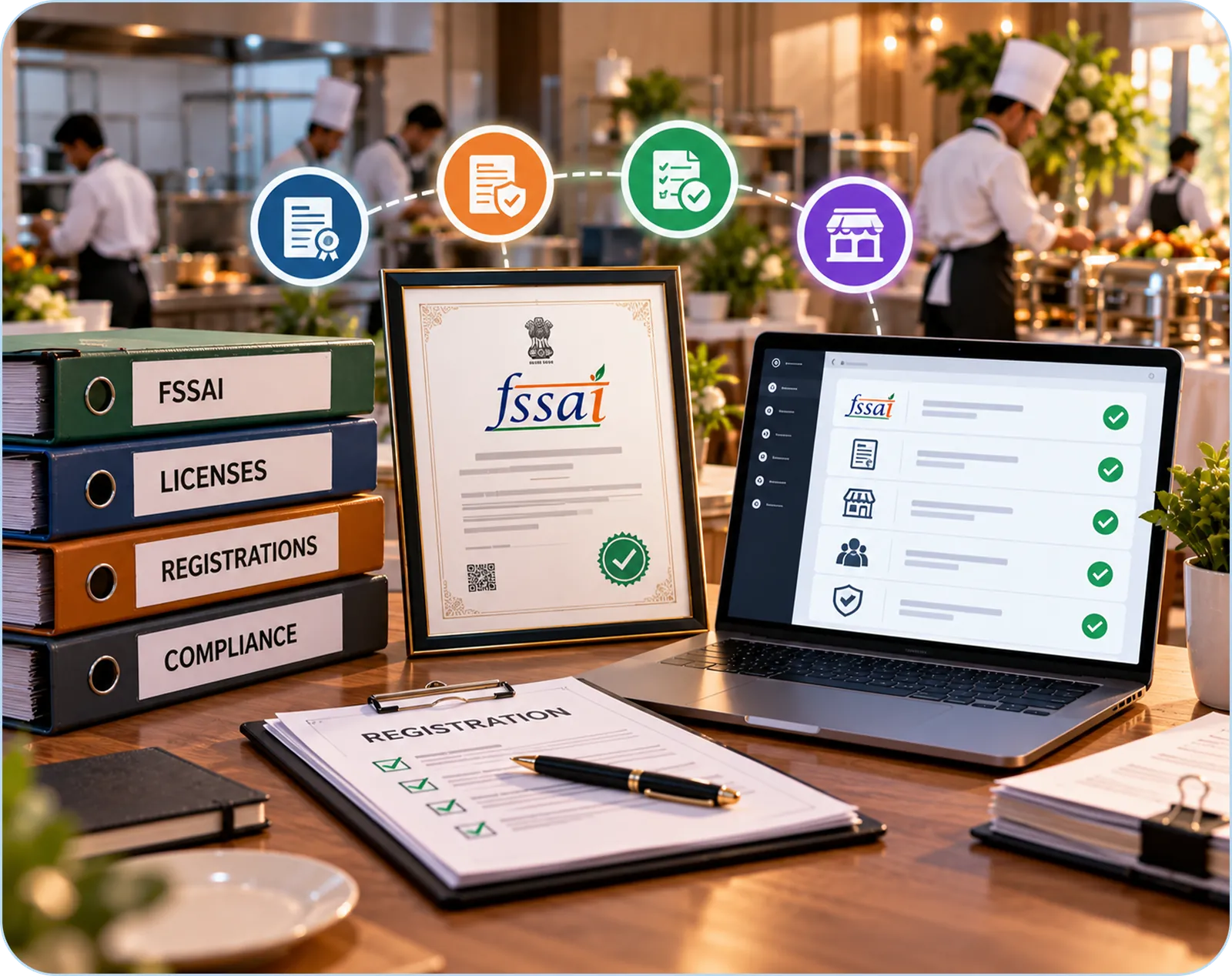
Compliance feels like paperwork until the day it's a locked gate: the corporate client who requires your FSSAI number before the tasting, the venue that won't let an unlicensed caterer in, the surprise inspection during your biggest event. Here's the stack, in plain language. (Thresholds and rules evolve - verify current specifics with your CA or consultant.)
Which FSSAI license does a catering business need?
Every food business in India needs FSSAI coverage, in three tiers by turnover:
- Basic Registration - small operators under the entry turnover threshold (₹12 lakh): a simple registration, quick to obtain.
- State License - the tier most established caterers occupy (₹12 lakh to ₹20 crore turnover): more documentation - premises details, water testing, food-safety plan basics.
- Central License - large multi-state operators and those above the state ceiling.
Operating at the wrong tier is a common and avoidable violation - growing caterers often outgrow their Basic Registration without noticing. Your FSSAI number belongs on your invoices and marketing; serious clients look for it.
GST registration
Mandatory once you cross the service-turnover threshold, and practically mandatory earlier if you want corporate work - B2B clients need your GSTIN to process payments cleanly. Covered in depth in our GST guide; the compliance-stack point is simply: registered, filed on time, invoices numbered sequentially.
The local layer
- Shop & Establishment registration for your kitchen premises
- Municipal health/trade license where your local body requires one for food operations
- Fire safety compliance for kitchen premises - increasingly checked for commercial kitchens with multiple gas connections
- Commercial gas connections - domestic cylinders in commercial use are both illegal and uninsurable; the day something goes wrong, this line decides everything
- Water testing reports - required with State License applications and simply good practice
Making the stack renewal-proof
Licenses fail silently - by expiring. Build a one-page compliance register: license, number, issue date, expiry, renewal lead time - reviewed monthly in your regular business rhythm. FSSAI renewals filed late incur penalties and, worse, gaps in validity that a client's vendor-verification catches at the worst moment. A caterer whose compliance folder is always current walks into corporate and institutional bids with an advantage that costs nothing but attention.
Compliance as marketing: frame it right and the boring stack becomes a selling line - "FSSAI-licensed kitchen, GST-registered, fire-compliant premises" reads as professionalism to exactly the clients who pay best. The paperwork you must do anyway is credibility you get for free.