Menu Planning for Large Events: Balancing Wow, Workload and Waste
Mahipal, Founder, CaterCaptain · Jul 03, 2026 · 3 min read
The Idea Behind CaterCaptain
Most software for caterers is built far from any actual kitchen - global products that assume drop-off catering and card payments, or generic restaurant POS stretched over an industry it doesn't understand. We took the opposite bet: build deep for one place first. Here's the reasoning, openly.
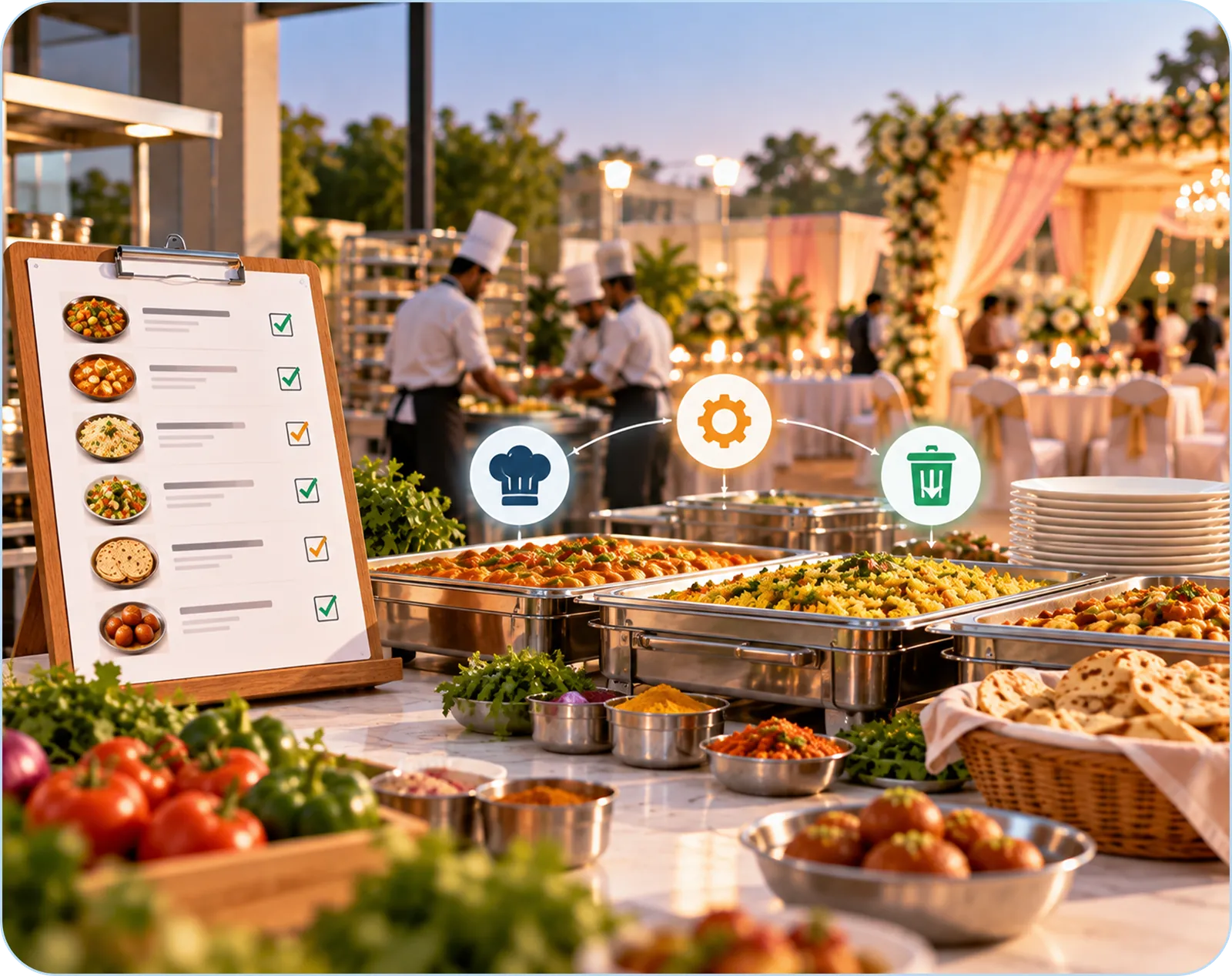
The menu is where three forces collide: the client wants wow, the kitchen wants feasibility, and the business wants margin. Great menu planning isn't picking dishes - it's engineering the collision so all three walk away satisfied.
How many dishes should a large event menu have?
Clients equate more dishes with more prestige; kitchens know every added dish multiplies prep, equipment, counter space and waste. The working compromise: guests meaningfully eat about 60% of a large buffet. Beyond ~22–25 items on a wedding spread, additions are decoration with a food cost. Guide clients toward depth (two exceptional sabjis) over width (four forgettable ones) - and price width honestly when they insist.
Score production complexity, not just cost
Two dishes with identical ingredient cost can have wildly different operational cost. Score each dish 1–3 on: prep time, skill dependency (does it need that one cook?), last-minute execution (fried/live items), and equipment load. A menu full of 3s is a menu that fails at 8 PM with 600 guests waiting. Balance the spread: anchor items that hold well (dal, rice, gravies) carrying volume, complexity items placed where they shine (one live counter, not three).
Cost-balance the categories
- Anchor (low cost, high volume): dal, rice, rotli, standard sabji - 50–60% of consumption, 30% of cost
- Signature (medium cost, high perception): a regional speciality done exceptionally - where reputation is made
- Premium (high cost, controlled volume): dry-fruit sweets, paneer specialities, live counters - portioned service, not open trays, or your costing dies here
Seasonality is margin
A menu locked in March for a December wedding meets December vegetable prices. Build menus around season-right produce, and put a repricing clause on long-lead bookings - or quote premium items as market-linked.
The service-wise trap in multi-day events
Sangeet dinner, wedding lunch, reception dinner - families choose menus separately per function and accidentally repeat 40% of items. Guests notice by day two. Plan the full event arc as one document: no repeated signature, evolving anchors, distinct sweet stories per function. It's a 20-minute exercise that reads as remarkable thoughtfulness.
The plan sheet is the bridge: a menu is a promise; the per-service plan sheet - dishes, quantities, ingredients, assigned cooks - is how the kitchen keeps it. Never let the first exist without the second.