Scaling from One Kitchen to Multiple: What Breaks and How to Prepare
Mahipal, Founder, CaterCaptain · Jul 13, 2026 · 3 min read
The Idea Behind CaterCaptain
Most software for caterers is built far from any actual kitchen - global products that assume drop-off catering and card payments, or generic restaurant POS stretched over an industry it doesn't understand. We took the opposite bet: build deep for one place first. Here's the reasoning, openly.
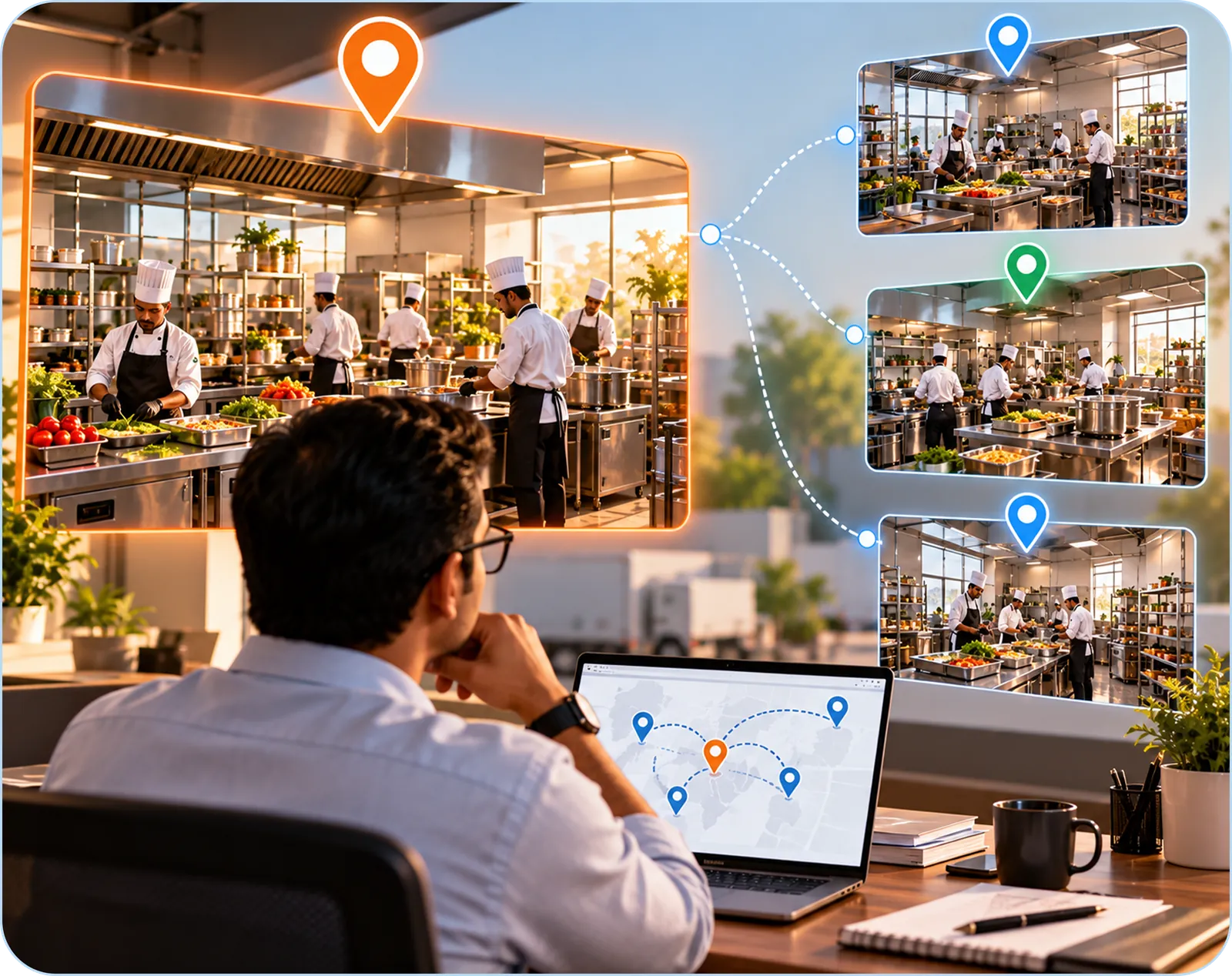
One kitchen runs on the owner's presence. Two kitchens is not twice the work - it's a different business, because for the first time, things happen where you aren't standing. Most multi-kitchen failures aren't about food or demand; they're about information. Here's what breaks, in the order it breaks.
What breaks first when a caterer opens a second kitchen?
With one kitchen, materials move from store to stove under one roof. With two, materials travel - and travel without records means the HQ store says 20 kg went, kitchen two says 15 kg arrived, and 5 kg lives forever in dispute. Before opening kitchen two, install the loop: request → approve → dispatch (with quantities, vehicle, batch) → receive (counted). On paper if you must, in software if you're serious - but installed before day one, because retrofitting discipline into a running kitchen is triple the pain.
What breaks second: the owner's attention
The owner who tastes every dal and checks every dispatch becomes the bottleneck at exactly two kitchens. The transition that scales: from doing to reviewing. That requires each kitchen to produce reviewable information - yesterday's consumption, today's events, stock alerts - without the owner physically extracting it. If your kitchens can't report, you can't scale; you can only commute.
What breaks third: the trusted-person model
Kitchen one runs on your veteran manager's memory. Kitchen two needs either a clone of him (doesn't exist) or a system that lets a good-but-normal captain run to his standard. Encode the veteran's knowledge - norms, vendor quirks, event routines - into checklists and system defaults. His expertise becomes company infrastructure instead of a single point of failure, and he becomes the reviewer of two kitchens rather than the engine of one.
Sequencing the expansion
- Systems first (month 0–2): dispatch loop, event records, per-event costing running clean in kitchen one
- Captain identified and trained (month 1–3): promoted insider beats outside hire for kitchen two, if the system supports them
- Kitchen two opens on overflow (month 3): let it absorb existing demand you're declining - safer than opening on hoped-for demand
- Review rhythm (from day one): daily 15-minute HQ review of both kitchens' numbers; weekly physical visit each
The economics nobody mentions
Kitchen two runs below kitchen one's margin for 1–2 seasons: new team inefficiency, duplicate equipment, learning-curve waste. Plan the cash for it. Expansion funded by hope strains kitchen one; expansion funded by a season's retained profit and honest projections compounds.
The readiness test: can you leave kitchen one for 7 days and know - from records, not calls - exactly what happened? If yes, you're ready for kitchen two. If no, kitchen two will simply double the chaos you currently manage in person.