The Multi-Kitchen Dispatch Checklist Every Catering HQ Needs
Mahipal, Founder, CaterCaptain · Jun 05, 2026 · 3 min read
The Idea Behind CaterCaptain
Most software for caterers is built far from any actual kitchen - global products that assume drop-off catering and card payments, or generic restaurant POS stretched over an industry it doesn't understand. We took the opposite bet: build deep for one place first. Here's the reasoning, openly.
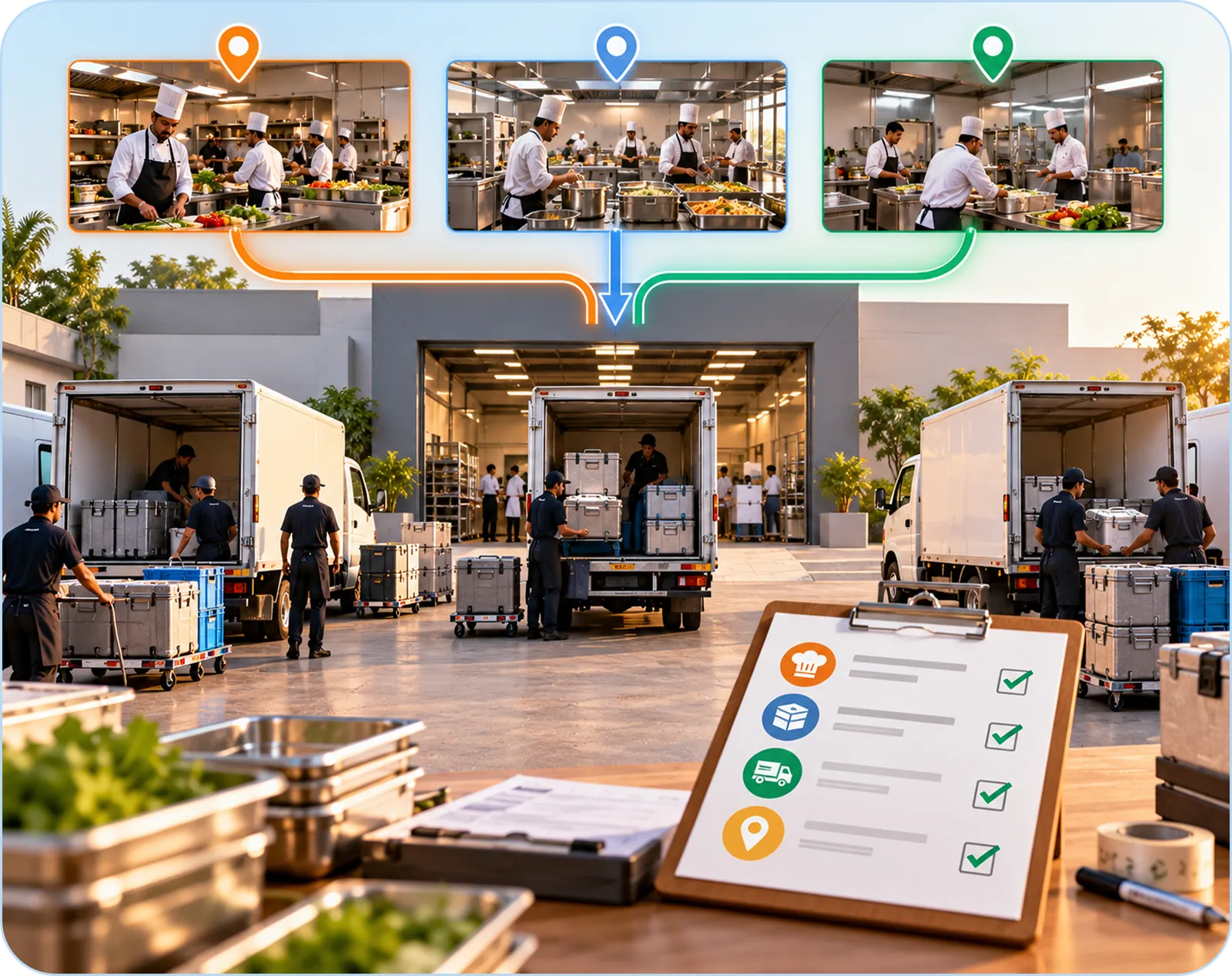
The most expensive phone call in catering is the one at 11:30 AM on event day: "Bhai, ahiya mirchi nathi aavi." Multi-kitchen dispatch fails not because teams are careless, but because nothing is written down at the moment of loading. This checklist fixes that.
What should you check before dispatching materials from HQ?
- Material list matched to the event plan - not to memory. The dispatch list should be generated from the event's requirement sheet, item by item.
- Quantities weighed/counted at loading - "one bag rice" is not a record; "25 kg basmati, batch 18-Aug" is.
- Batch noted for perishables - when a client complains about dahi, you want to know which batch went where.
- Crockery counted out - plates, glasses, serving spoons leave as numbers, or they return as arguments.
- Vehicle, driver name and mobile recorded - the 20 seconds this takes has ended a thousand "driver kya che?" panics.
- Expected arrival time communicated to the receiving kitchen's captain.
At the receiving kitchen
- Physical count against the dispatch list - before signing anything, before the driver leaves.
- Shortages flagged immediately - a discrepancy raised at 9 AM can be fixed; one discovered at 1 PM becomes a vendor emergency at premium prices.
- Received quantities recorded - dispatched 20 kg, received 20 kg, on record. This single habit ends most HQ-vs-kitchen disputes.
- Storage assigned - perishables to cold storage first, always.
After the event
- Return count - unused sealed materials and all crockery counted back.
- Consumption entry - what was actually used vs planned. Three events of this data will change how you order forever.
- Waste log - leftover cooked food quantity, even roughly. Patterns emerge fast: if kaju katli always comes back 15% over, your sweet norms are wrong.
Why paper checklists eventually break
The checklist above works on paper for one kitchen. At two or more kitchens with overlapping events, paper fails at exactly one point: nobody at HQ can see all kitchens at once. The register is in the vehicle, the photo is in someone's WhatsApp, and the owner reconstructs the day from phone calls. A shared system where requests, approvals, dispatches and receipts live on one timeline turns dispatch from an argument into a lookup.
Start tomorrow: even before any software, add one rule - nothing leaves HQ without a written line: item, quantity, kitchen, vehicle, time. That one line is 80% of dispute prevention.